Streamlining Onboarding for a Global Trading Platform
A systems-driven redesign of compliance-critical onboarding that reduced drop-offs by 12%, improved data accuracy by 10%, and decreased misclassification by 25%.
Impact at a Glance
Measurable improvements across conversion, accuracy, and operational efficiency
12%
Reduction in early drop-offs
25%
Reduction in misclassification
10%
Improvement in data quality
6%
Increased address submission
-
My Role
Lead UX Designer
-
Duration
3 Months
-
Markets
Australia & UK
-
Team
Cross-functional
Problem
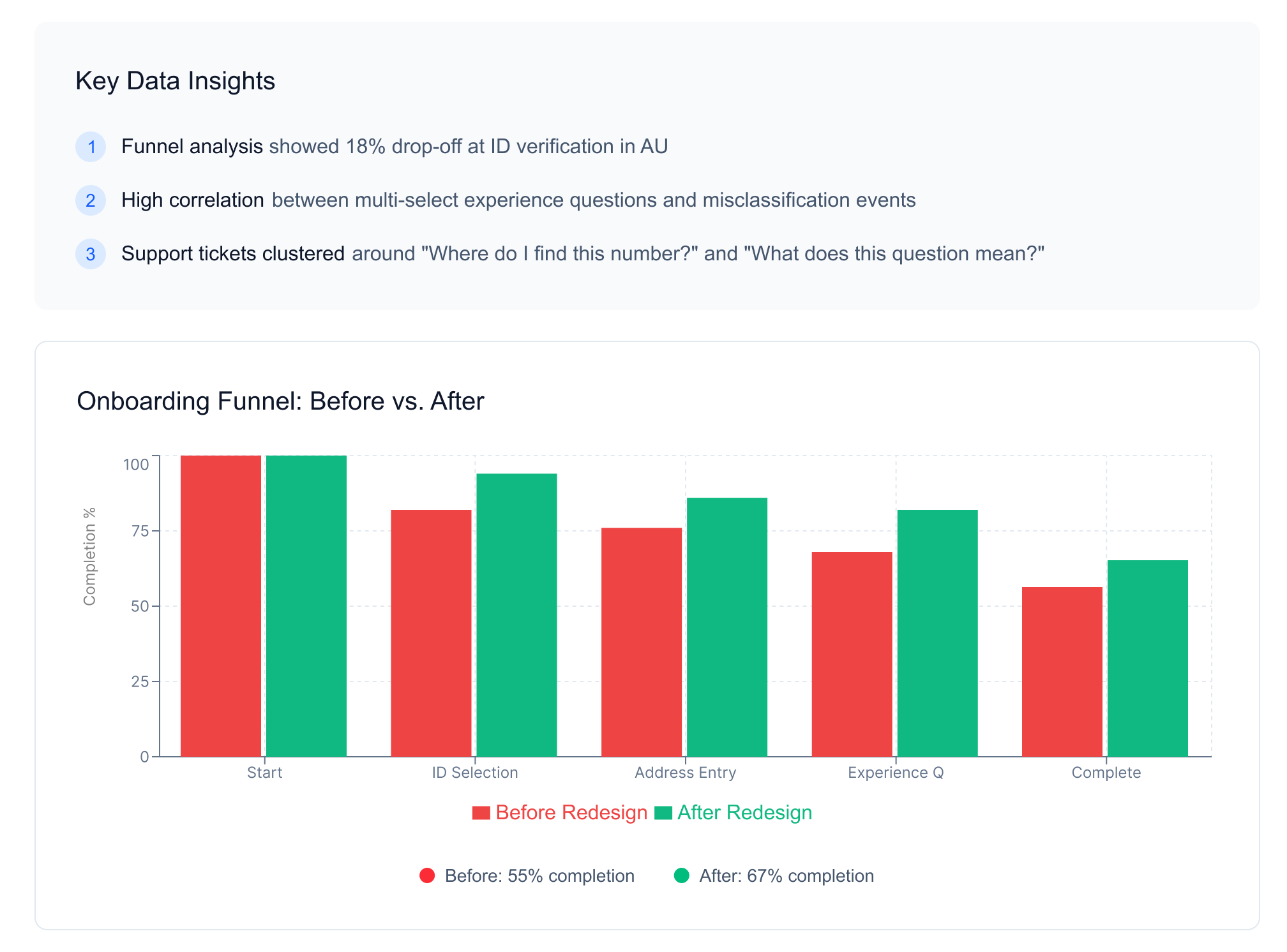
The onboarding flow had evolved through years of incremental regulatory updates, resulting in a fragmented experience that created friction at the exact moment when trust, clarity, and confidence were most critical.
Cognitive Overload
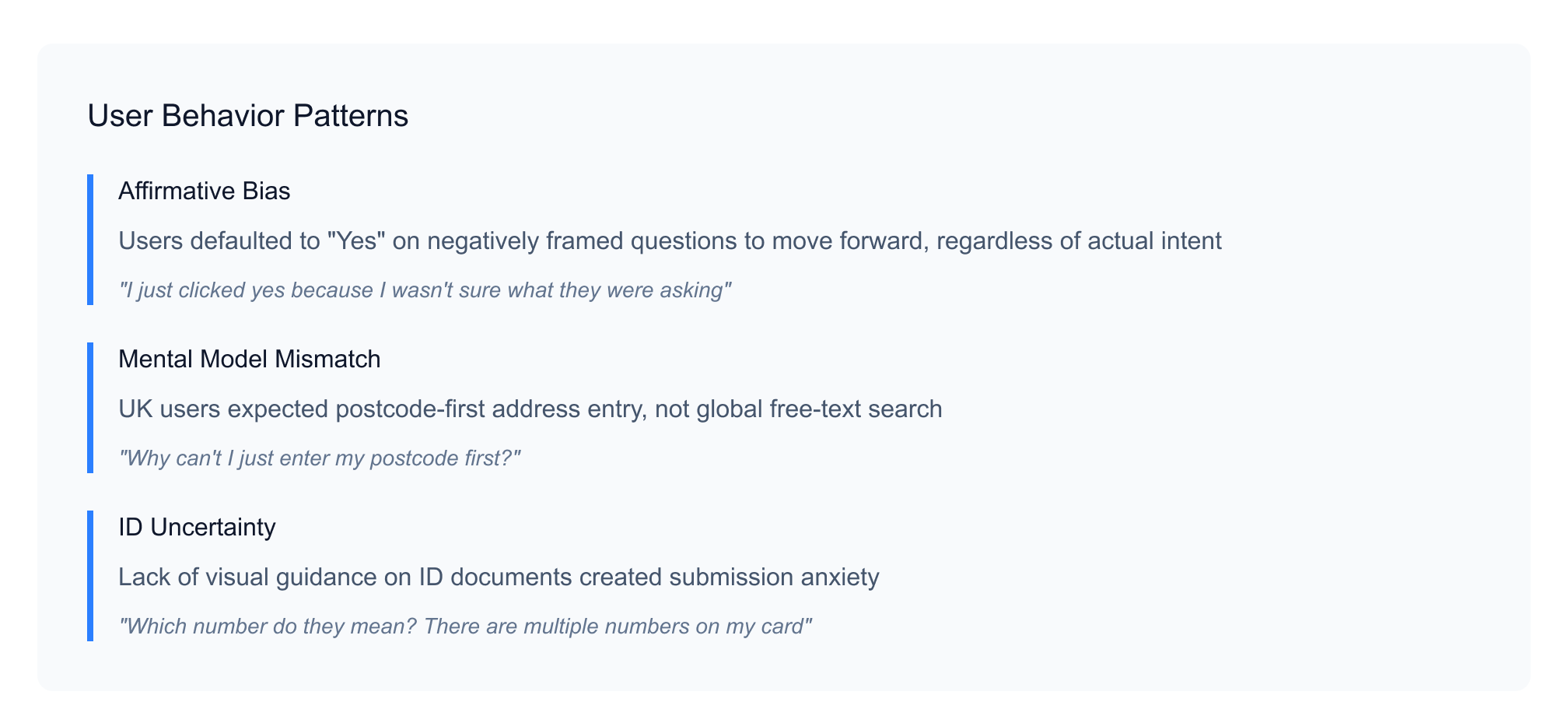
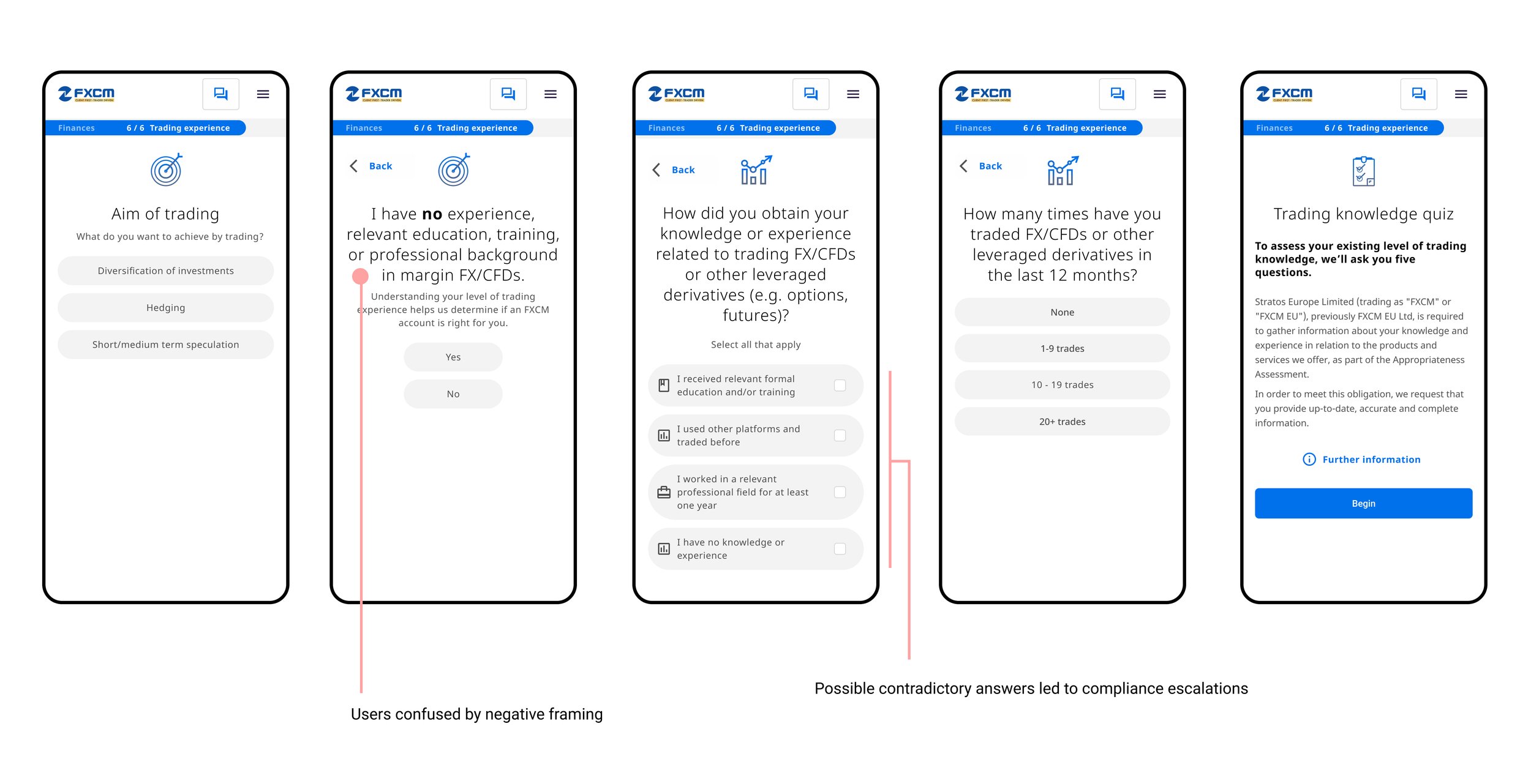
Negatively framed questions and ambiguous multi-select options caused user misinterpretation and decision paralysis.
Impact: 18% drop-off at key verification steps
Operational Risk
Inaccurate ID submissions and incorrect experience classification increased compliance review volume.
Impact: Significant support escalations
Regional Mismatch
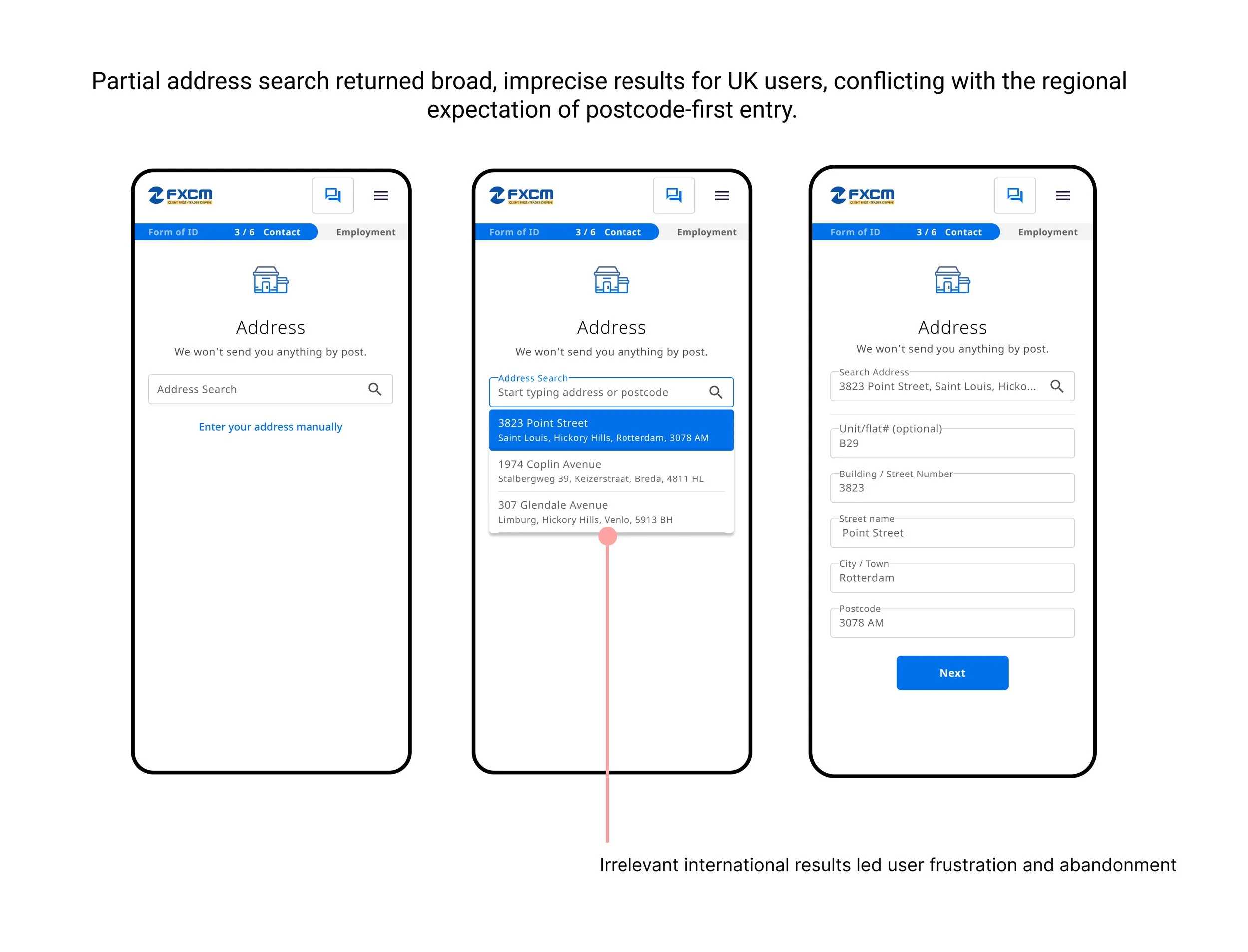
Global interaction patterns conflicted with local mental models (e.g., postcode-first addressing in the UK).
Impact: High error rates in address submission
Business Impact
Users abandoned early, reducing verified account activation and increasing support costs.
Impact: Lost revenue and inefficiency
Research
Qualitative Findings
Design Strategy
I defined three system-level principles to reframe the onboarding experience while preserving backend compliance logic and maintaining engineering feasibility.
Reduce Cognitive Load
Replace negative framing and ambiguous logic with clear, progressive disclosure and conversational prompts.
Reframe questions neutrally
Add contextual guidance
Use progressive disclosure
Align to Regional Mental Models
Localize interaction patterns without fragmenting the global system architecture.
Postcode-first for UK
Region-aware ID options
Localized validation
Enforce Data Integrity by Design
Use mutual exclusivity, conditional routing, and visual guidance to prevent invalid inputs.
Mutually exclusive options
Conditional routing logic
Visual ID guidance
Key Product Decisions
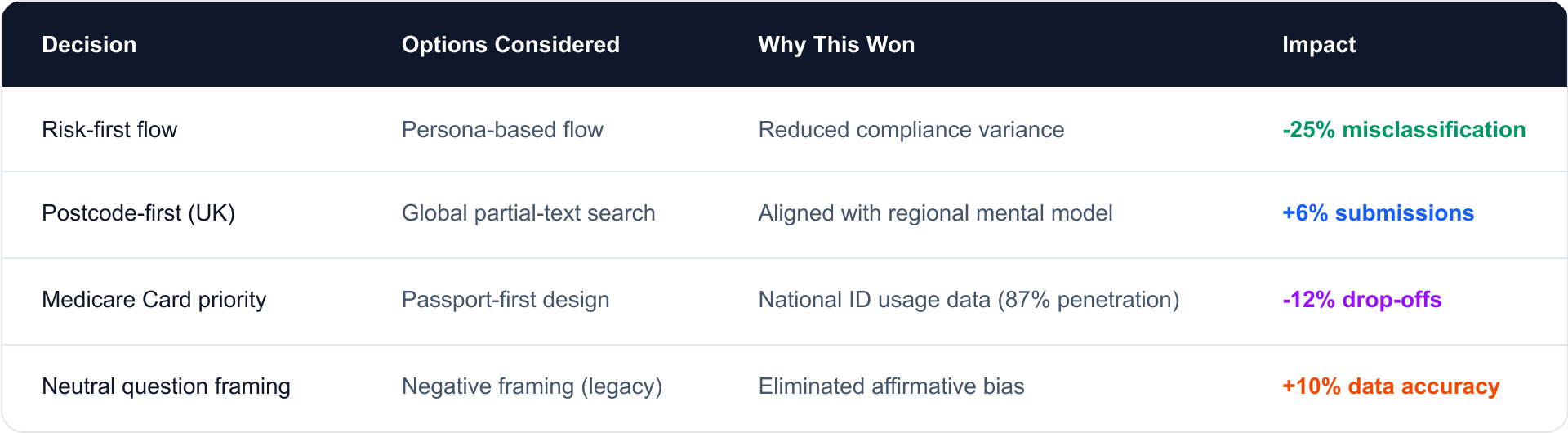
A detailed log of the strategic product decisions that established the foundation for measurable outcomes and cross-team adoption.
Solution Architecture
Three core interventions targeting the highest-impact friction points, designed for measurable outcomes within a single release cycle.
ID verification
PROBLEM
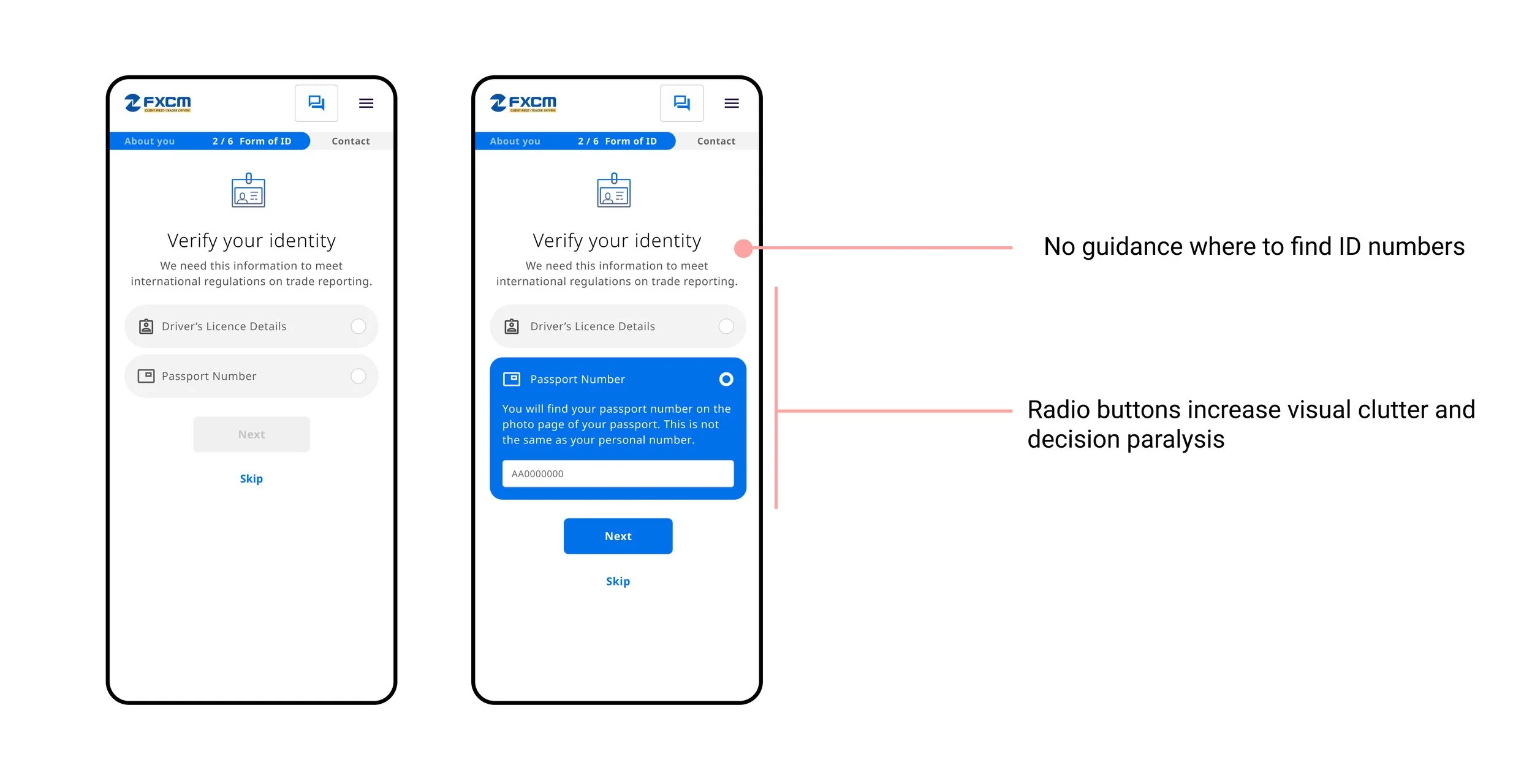
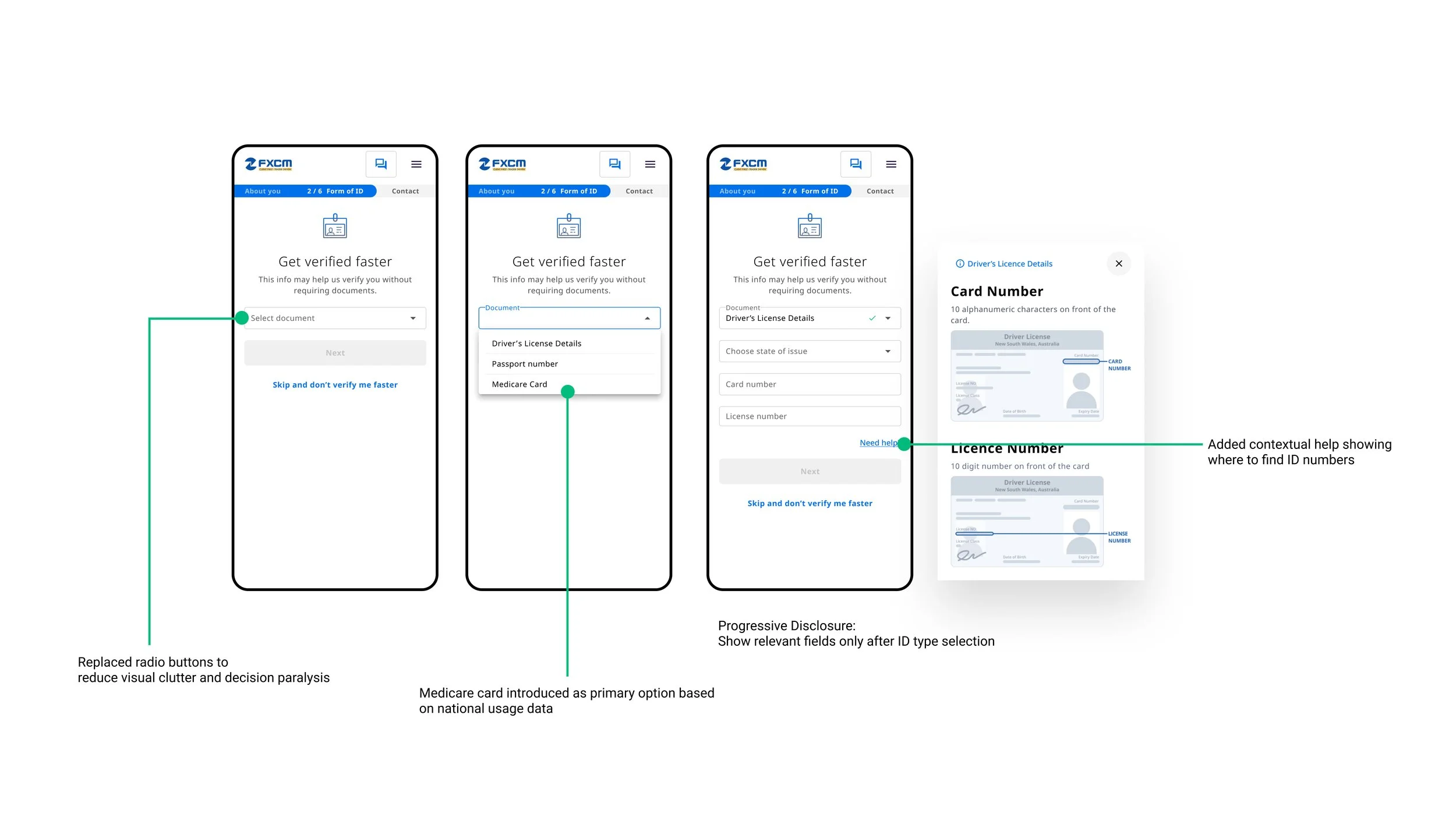
Users abandoned when asked to select ID types without context or guidance. 18% drop-off rate.
INTERVENTIONS
Introduced Medicare Card as a primary ID option based on national usage data
Replaced radio inputs with a structured dropdown selector to reduce ambiguity
Added contextual visual guidance showing where to locate ID numbers on physical cards.

in 2023–24, 84% of Australians received at least one Medicare-subsidised general practitioner (GP) attendance. This is a decrease from 88% between 2017–18 and 2019–20. Attendance dropped to 85% in 2020–21 as COVID-19 restrictions were introduced in response to the pandemic but increased to 90% of Australians in 2021–22, which coincided with the expansion and uptake of Medicare-subsidised telehealth and COVID-19 vaccinations
Impact
12% reduction in drop-offs
Improved first-attempt accuracy
Reduced support escalations
Clear visual guidance provided
Address Flow
PROBLEM
Global partial-text search conflicted with UK postcode-first behavior, generating irrelevant results.
INTERVENTIONS
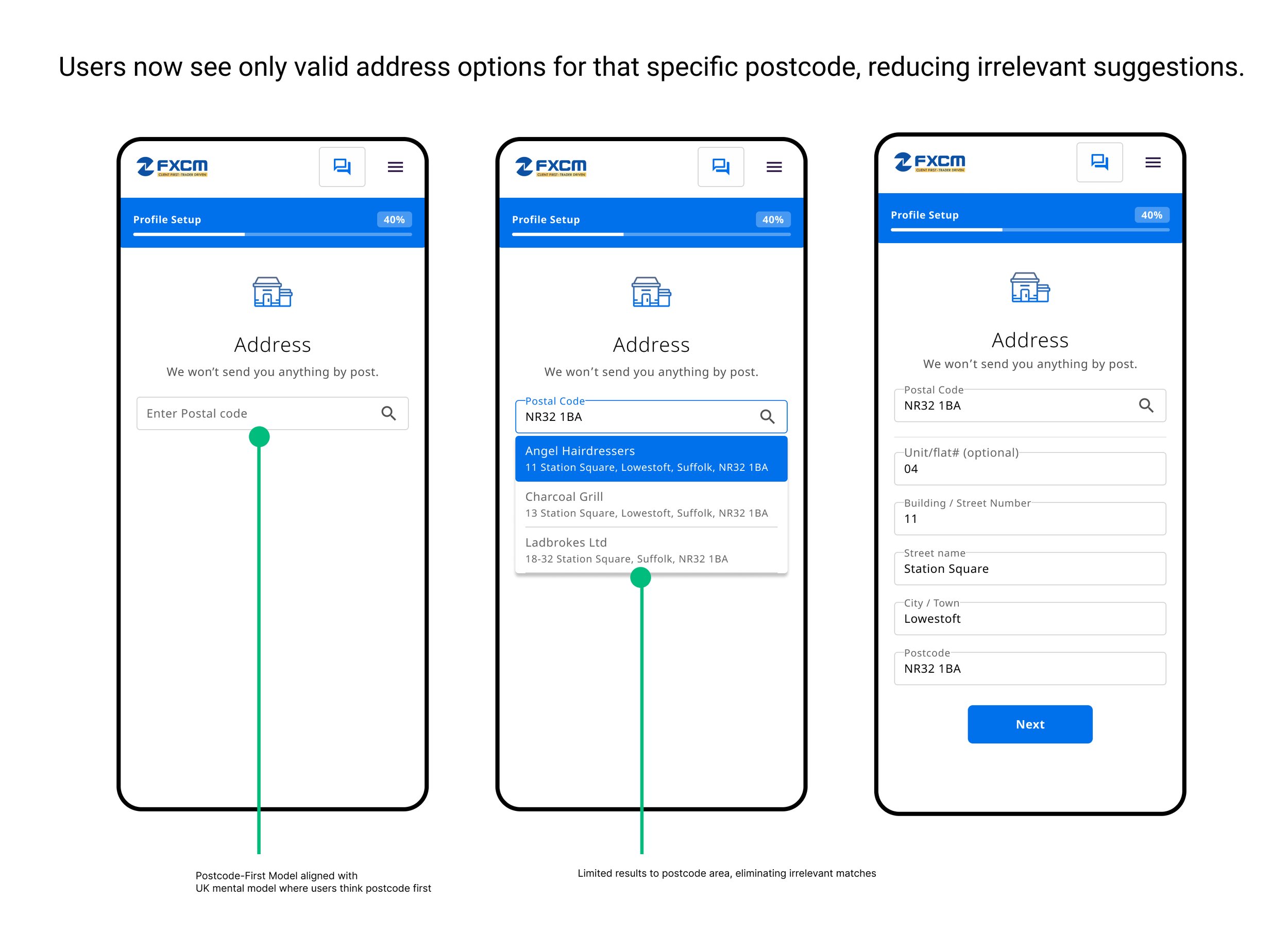
Introduced postcode-first address entry model aligned with UK mental models
Limited address results to postcode-bound datasets for accuracy
Auto-filled downstream fields post-selection to reduce manual input
Impact
6% increase in successful submissions
Reduced error rates
Faster task completion
Aligned with user expectations
Experience Classification System
PROBLEM
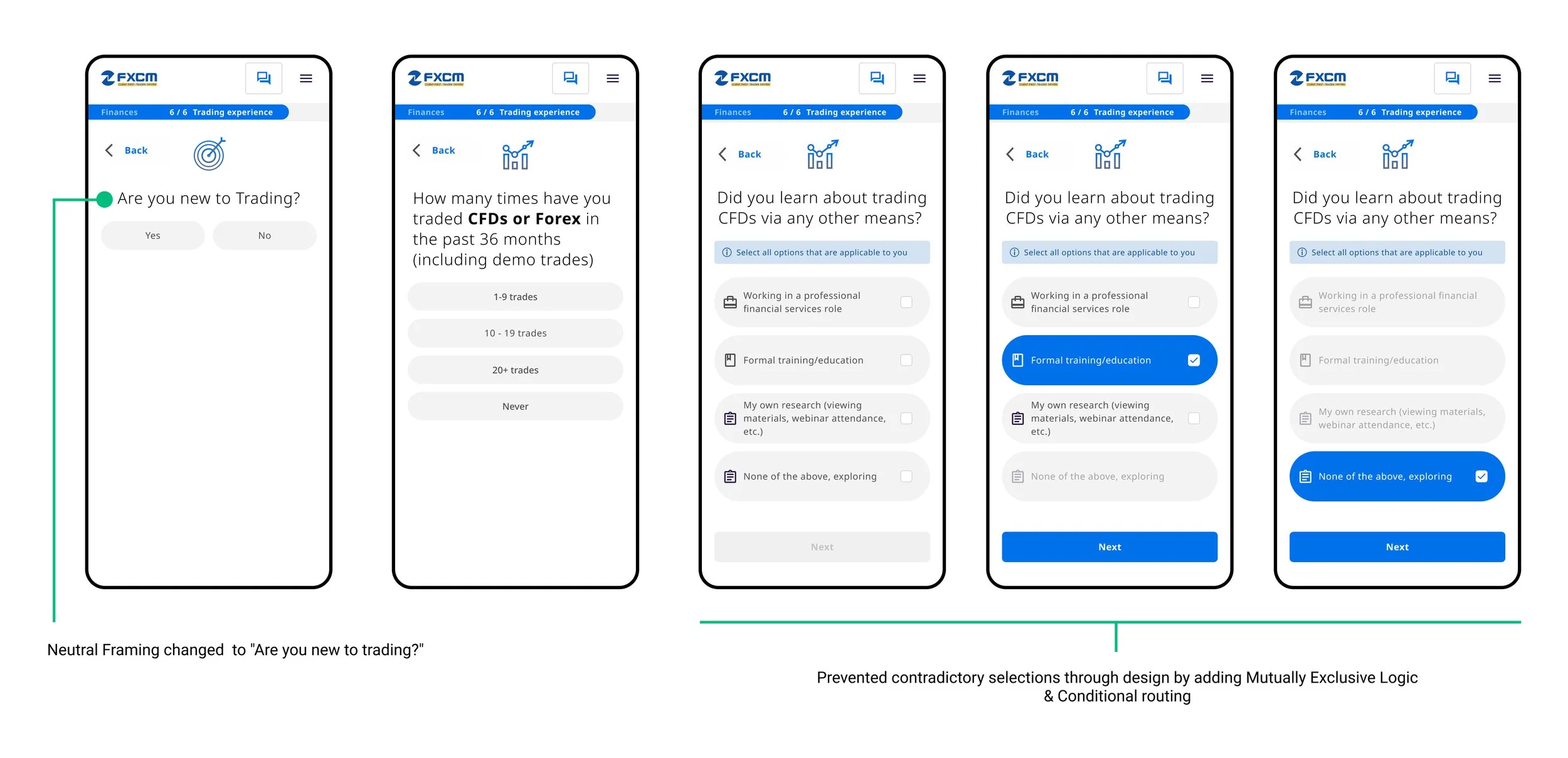
Negatively framed yes/no and multi-select questions produced contradictory responses, inflating high-risk flags by 25%.
INTERVENTIONS
Reframed entry point to neutral prompt: "Are you new to trading?"
Introduced conditional routing based on declared experience level
Enforced mutually exclusive selection logic to prevent contradictory answers
Design Principle
By eliminating negative framing and enforcing mutually exclusive choices through conditional routing, we prevented users from inadvertently providing contradictory information, reducing downstream compliance risk and improving system data integrity.
Impact
25% reduction in misclassification
Clearer intent-based routing
Prevented invalid states
Improved data reliability
Results & Business Impact
Across AU and UK onboarding journeys, the redesign delivered measurable improvements in conversion, data quality, and operational efficiency.
CONVERSION
12%
Reduction in avoidable early-stage drop-offs
DATA QUALITY
10%
Improvement in clean, validated user data
RISK CLASSIFICATION
25%
Reduction in misclassified high-risk users
Long-term Impact
The system now delivers a more predictable, scalable, and audit-friendly onboarding experience. The region-aware interaction patterns have been adopted as a framework for future market expansion, reducing time-to-market for new regions by approximately 40%.
Most importantly, the compliance and support teams report significantly fewer escalations related to onboarding data quality, freeing up resources for higher-value work.
Tradeoff Analysis
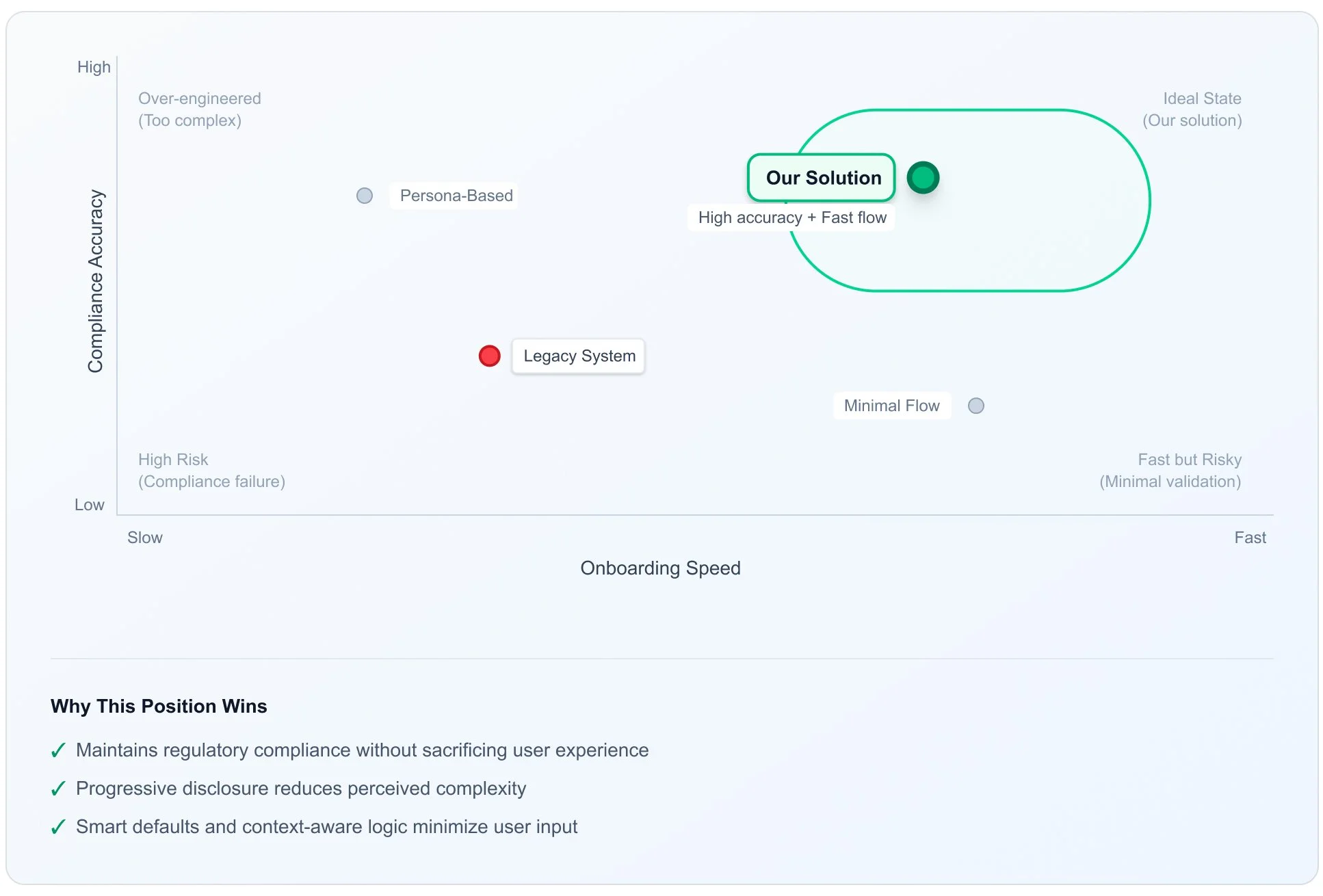
"This project demonstrated that tactical UX wins can cascade into strategic platform value."
The onboarding redesign became a proof point for investing in localization infrastructure and compliance-aware design systems across the entire product organization. This framework was adopted as the standard onboarding model for subsequent regulated market launches, reducing time-to-market for new regions.
Reflection
"This project reinforced that in regulated systems, clarity outperforms complexity."
Small structural changes such as wording, routing logic, and interaction constraints can outperform heavy engineering investment when aligned with user mental models.
Key Takeaway
Design is a risk-reduction function in enterprise platforms, not just a usability layer. The strongest solutions emerge at the intersection of compliance, systems thinking, and human behavior.
Team & Collaboration
I led alignment between Product, Compliance, Engineering, and Legal, facilitating weekly decision reviews to resolve regulatory ambiguity and unblock delivery across three regional teams. This cross-functional orchestration was critical to establishing trust and accelerating consensus on high-stakes compliance decisions.
What Failed
Our first version over-indexed on automation, which reduced perceived user control in high-risk flows. Usability testing showed a trust drop in regulated markets, leading us to reintroduce manual confirmation checkpoints. This taught us that in compliance-heavy contexts, users need to feel agency over critical decisions, automation must serve transparency, not replace it.
Early partnership with compliance and legal stakeholders
Established the standard for high-impact, low-complexity interventions
Rapid validation through A/B testing and funnel analysis
Drove region-aware design without architectural fragmentation
What Worked
What I Learned
Regulatory constraints can drive design clarity
Mental model research is critical in global products
Small changes compound into significant impact
Data integrity starts at the interaction layer